There is a particular kind of confusion that comes with commercial property investment in a city like Hisar. Not the dramatic, chaotic kind. The quiet, stubborn kind — where two options both look reasonable on paper, and you genuinely cannot tell which one will make you more money five years from now.
That is exactly the question investors keep circling back to: high-street commercial shop for sale in Hisar versus a mall unit in Hisar. Both carry price tags. Both promise returns. But they behave very differently once money is actually on the line.
Why This Decision Matters More Than Most People Realise
Hisar is not a sleepy Tier-3 city anymore. The Hisar commercial real estate market has been quietly reshaping itself — new infrastructure corridors, the upcoming Hisar airport, expanding industrial zones, and a growing middle-class consumer base have all changed what "good commercial property" means here.
That matters because the gap between a correct investment decision and an average one, in this city specifically, can be significant. We are not talking about a marginal difference in rental yield. We are talking about properties that appreciate at very different rates, attract very different tenants, and behave very differently during economic slowdowns.
So yes, this decision deserves more than a five-minute comparison.
What Each Property Type Actually Is
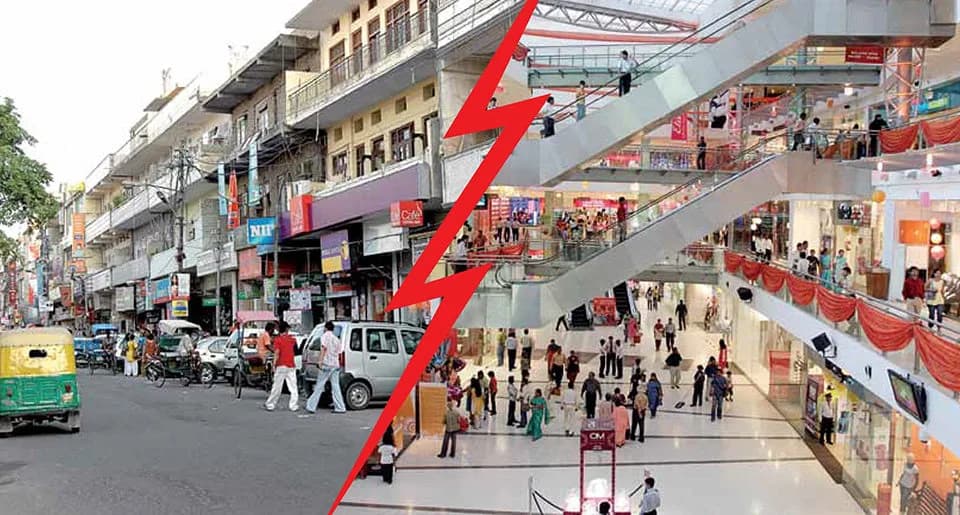
A high-street shop in Hisar typically sits on a main commercial road — think Model Town Road, Red Square Market, Sector 14 market, or along the urban stretch of National Highway 9. These are ground-floor or lower-ground retail spaces with direct street access. Foot traffic is organic. Visibility is constant. The tenant base ranges from pharmacies and garment stores to banks and fast-food chains.
A mall unit for sale in Hisar is a commercial space inside a managed retail complex. Currently, Hisar has limited but growing organised retail presence. Mall units come with structured lease agreements, common area maintenance (CAM) charges, uniform operating hours, and a dependency on the mall's own footfall generation. You are buying into a shared commercial ecosystem, not a standalone asset.
That distinction changes everything.
Rental Yield: The Numbers People Actually Want
This is where most investors go first. And honestly, the gap is worth examining closely.
High-street shops in prime Hisar locations — particularly near Red Square Market or along Urban Estate roads — tend to yield rental returns of 5% to 8% annually, depending on the property size, frontage width, and tenant type. A well-positioned shop on a busy arterial road with a branded tenant can push past that range during strong economic cycles.
Mall units, in contrast, often deliver 3% to 5% rental yields in the early operating years of a mall, with returns improving once footfall stabilises — typically after 3 to 5 years. Until then, vacancy risk is real, and smaller investors sometimes find themselves absorbing maintenance costs while the unit sits empty.
That said, malls with strong anchor tenants (hypermarkets, multiplex cinemas, established food courts) do close this gap over time. The risk-reward profile is simply different.
Capital Appreciation: Which Grows Faster?
High-street commercial property in Hisar has historically appreciated faster. The reason is simple — supply is fixed. You cannot create more frontage on a busy road. As the city expands and commercial activity increases, the scarcity of well-positioned street-facing shops drives prices upward.
Mall units appreciate more slowly at first, but in a well-managed, well-anchored mall, long-term appreciation can be substantial. The complication is that mall valuations are tied to the mall's occupancy health. If anchor tenants leave or footfall drops, your unit's resale value can plateau or decline.
For Hisar specifically, where the organised retail sector is still developing, street-facing shops carry lower uncertainty.
Liquidity: How Easily Can You Sell?
This is perhaps the most underrated factor in Hisar commercial property investment.
High-street shops are easier to sell. The buyer pool is wider — local businesses, individual investors, national franchise operators, and even small institutional buyers all consider high-street property. Transactions move faster.
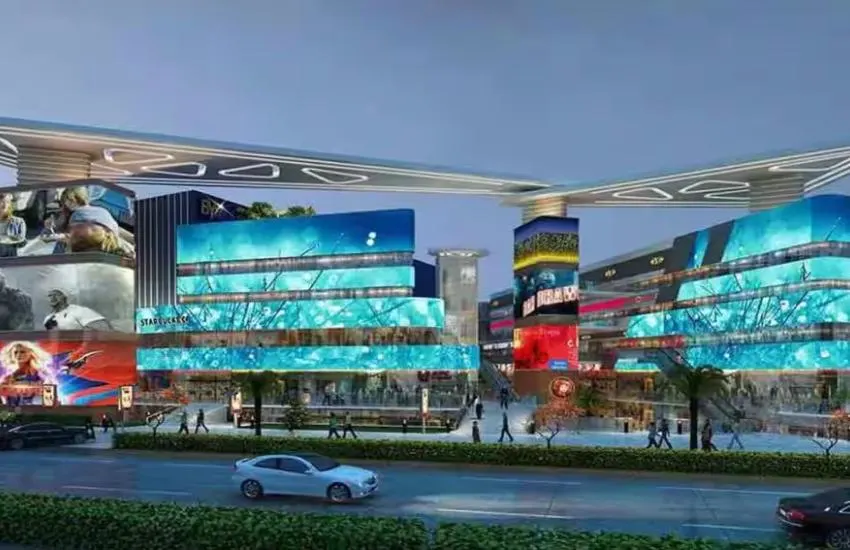
Mall units have a narrower secondary market. Buyers want to know occupancy data, CAM charges, remaining lease terms, and the mall's anchor tenant health before committing. Selling a mall unit quickly, especially in a mid-tier city, can require accepting a discount.
Operating Costs: The Part That Often Gets Ignored
High-street shop owners handle maintenance on their own terms. No forced contribution to shared infrastructure.
Mall unit owners pay Common Area Maintenance charges — sometimes 15% to 25% of the base rent — which eat into net yield. These charges cover elevators, security, cleaning, air conditioning, and central marketing. They are not optional. And in early-stage malls, these charges sometimes exceed what the unit earns if it sits vacant.
This cost structure is something many first-time investors miss entirely when comparing sticker prices.
Mistakes Investors Keep Making Here
The most common error is comparing gross yield without accounting for vacancy periods, maintenance costs, or the liquidity discount at resale.
Another frequent mistake: buying a mall unit in a mall that has not yet reached operational stability, drawn in by pre-launch pricing. Pre-launch prices look attractive. But if the mall takes four years to stabilise and your unit earns negligible rent in the meantime, the effective return drops sharply.
On the high-street side, a mistake that appears often is buying on a road that looks busy today but lacks long-term commercial zoning protection. Infrastructure changes can reroute traffic. Due diligence on zoning and planned road development matters.
What Experienced Investors in Hisar Tend to Do
Investors who have operated in the Hisar commercial real estate market for several cycles generally favour high-street shops for the core of their portfolio, especially in proven micro-markets like Sector 14, Model Town, and the Urban Estate commercial belts.
They treat mall units selectively — only in properties with verifiable anchor tenant commitments, strong developer track records, and markets where organised retail already has proven traction.
Diversification between both is not unusual. But the weighting tends to lean toward street-facing assets for stability, with mall units playing a higher-risk, potentially higher-reward satellite role.
Closing Thoughts
There is no universal answer here. The better question is: what kind of investor are you, and what does your investment need to do for you?
If you want lower vacancy risk, higher liquidity, and more predictable appreciation, high-street commercial shops in Hisar's established corridors are the stronger choice. If you have a longer horizon, higher risk tolerance, and you are buying into a well-anchored mall at the right price point, mall units can deliver.
What the market does not reward is indecision or incomplete information. Hisar's commercial sector is at an interesting inflection point. The investors paying attention now are the ones who will have options later.
FAQs
Which gives a better monthly rental income in Hisar — a high-street shop or a mall unit?
High-street shops generally offer better net monthly rental income in Hisar because they carry no mandatory CAM charges. A mall unit may show a higher gross rent on paper, but after CAM deductions, net yield often falls below that of a comparable street-facing property.
Is a mall unit for sale in Hisar a good long-term investment?
It can be, but only in a well-established mall with proven footfall and strong anchor tenants. Early-stage mall investments carry higher vacancy risk and may take 3 to 5 years to stabilise. Buyers should verify operational history before committing.
How do I assess whether a high-street shop in Hisar is in the right location?
Look at current tenant mix on the street (established brands signal commercial viability), daily pedestrian and vehicle traffic patterns, proximity to residential catchment areas, and municipal zoning plans. A property on a road slated for widening or rerouting is a different risk proposition than one in a mature commercial corridor.
What is the typical price range for commercial shops for sale in Hisar?
Prices vary significantly by location and size. High-street shops in prime Hisar corridors can range from approximately Rs 30 lakh for smaller units in secondary markets to Rs 1 crore and above for well-positioned ground-floor frontage in primary commercial zones. Mall units are typically priced by square foot and vary by floor, facing, and developer reputation.
Are there financing options available for commercial property purchase in Hisar?
Yes. Most nationalised and private sector banks offer commercial property loans, though the loan-to-value ratio for commercial assets is generally lower than residential — typically 60% to 70% of the property value. Interest rates on commercial loans are also slightly higher than home loans. Pre-approved projects from registered developers may have bank tie-ups that streamline the process.
What documents should I check before buying a commercial shop or mall unit in Hisar?
Key documents include the title deed, property tax receipts, RERA registration (if applicable), approved building plan, occupancy certificate, and encumbrance certificate. For mall units, also review the CAM agreement, lease deed template, and the mall's RERA filing separately from the developer's residential projects.